
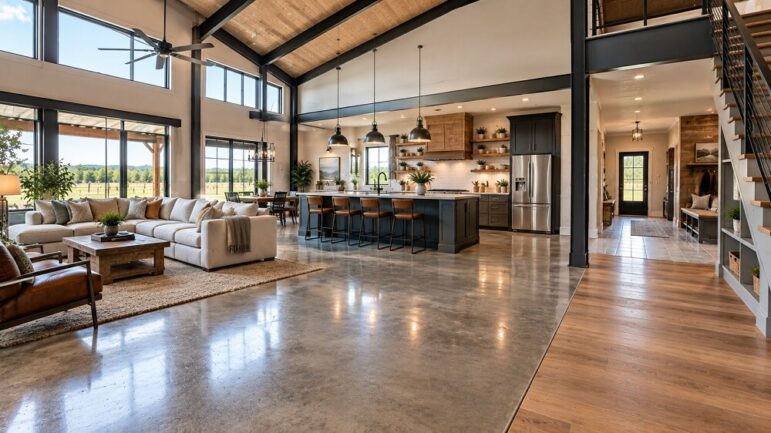
Barndominiums represent the perfect marriage of rustic charm and modern living. With their expansive open floor plans, high ceilings, and industrial roots, these homes offer a lifestyle that traditional houses simply cannot match. However, that unique architecture presents a specific challenge when it comes to finishing touches—particularly the floors.
Choosing the right flooring for a barndominium isn’t just about aesthetics; it is about durability, maintenance, and managing the specific environment of a large, open structure. From the mudroom entry to the great room, here is a breakdown of the best flooring options to ensure the home remains beautiful and functional for decades.
Understanding the Barndominium Environment
Before diving into materials, it is important to understand the stressors a barndominium floor faces. These homes often sit on concrete slabs, which can transmit moisture. They feature massive, open spaces that require materials capable of spanning large areas without buckling. Furthermore, the “shop-house” lifestyle—where residents might move from an outdoor work area directly into the living space—demands a floor that can handle dirt, grit, and heavy foot traffic.
1. Polished Concrete: The Gold Standard
For many barndominium owners, polished concrete is the undisputed champion. It leans into the industrial aesthetic of the building’s origins while offering incredible practicality.
Why it works: Concrete is unmatched in durability. It will not dent, scratch, or warp. Because barndominiums are often built on slab-on-grade foundations, polishing the existing concrete is a cost-effective way to finish the floor without adding layers of material. Modern polishing techniques can transform the grey slab into a high-gloss, marble-like surface that reflects light and keeps the space cool in the summer.
The Verdict: Best for those who prioritize low maintenance and modern industrial style. Radiant heating can be installed within the slab, making it a comfortable choice even in colder climates.
2. Luxury Vinyl Plank (LVP): The Versatile Performer
Luxury Vinyl Plank has exploded in popularity, and for good reason. It offers the look of hardwood or stone without the fragility.
Why it works: LVP is essentially waterproof, making it ideal for homes that might have pets, kids, or high humidity. It is designed to be installed as a “floating” floor, which means it can expand and contract with temperature changes—a crucial feature for large, open barndominium layouts. High-quality LVP comes with a thick wear layer that resists scratches from boots and furniture.
The Verdict: Perfect for the homeowner who wants the warmth and look of wood but needs the resilience of synthetic materials. It is comfortable underfoot and easy to clean.
3. Large-Format Porcelain Tile: The Elegant Workhorse
Tile is no longer just for bathrooms. Large-format porcelain tiles (think 24×24 inches or larger) are becoming a staple in barndominium living areas.
Why it works: Porcelain is fired at high temperatures, making it incredibly hard and impervious to water. Large tiles minimize grout lines, creating a seamless look that complements the vastness of a barndominium. Unlike ceramic, porcelain can handle the heavy loads of large furniture or equipment without cracking. It is also fire-resistant and stain-resistant.
The Verdict: A great choice for entryways, mudrooms, and kitchens where moisture and dirt are most prevalent. It offers a more “finished” and elegant look than concrete.
4. Engineered Hardwood: The Warmth of Nature
While solid hardwood can be risky in a structure that experiences significant temperature swings or sits on a slab, engineered hardwood is a viable alternative.
Why it works: Engineered wood is constructed with a plywood core and a real wood veneer top. This construction makes it much more dimensionally stable than solid wood, meaning it is less likely to cup or warp when humidity levels fluctuate. It brings a level of warmth and acoustic dampening that hard surfaces like concrete lack, which is valuable in an open-concept space.
The Verdict: Best for bedrooms, offices, or lofts where the homeowner desires genuine wood but wants the stability required for a barndominium’s structural environment.
5. Stained Concrete: Budget-Friendly Character
If a high-gloss polish feels too sterile, stained concrete offers a middle ground. Acid stains react with the minerals in the concrete to create mottled, earthy tones that resemble leather or marble.
Why it works: This method allows the homeowner to utilize the existing slab while adding visual interest. It is still concrete—meaning it is tough as nails—but it softens the industrial feel. Sealed stained concrete is easy to sweep and mop, making it a practical choice for a home that doubles as a workspace.
The Verdict: A fantastic option for those on a budget who want a custom look without the cost of laying down new flooring materials.
The Verdict: Matching Material to Zone
In a barndominium, a one-size-fits-all approach rarely works. The best strategy is often to mix materials by zone:
- The Shop/Garage: Polished concrete or heavy-duty epoxy.
- The Mudroom: Porcelain tile or LVP for easy cleaning.
- The Main Living Area: Polished concrete (for a modern industrial feel) or LVP (for warmth).
- Bedrooms: Engineered hardwood or plush carpet for sound absorption.
Ultimately, the best flooring for a barndominium is one that balances the rugged nature of the building with the comfort of a home. By selecting materials that can withstand heavy traffic and environmental shifts, the barndominium will remain a stunning, functional space for years to come.