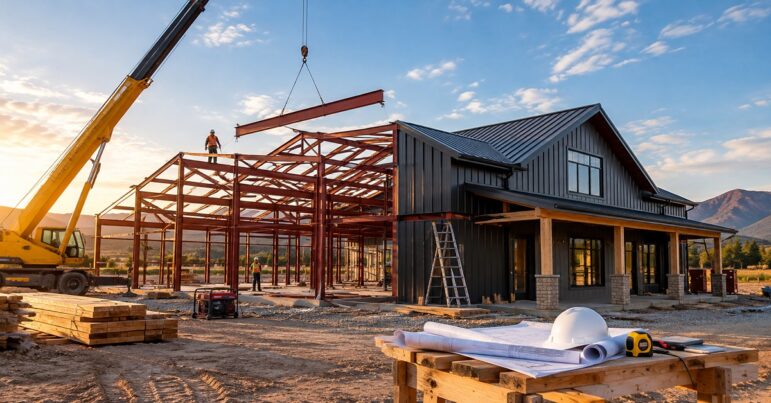
The barndominium trend has moved from a niche rural curiosity to a mainstream housing option. For those looking to escape the constraints of traditional stick-built homes, the combination of a massive workshop and comfortable living quarters is undeniably appealing.
However, when investing in a new construction project, the most critical question isn’t about aesthetics or floor plans—it is about durability. Specifically, what is the actual lifespan of a steel barndominium?
The short answer is that a steel-framed structure can easily last 50 to 100 years or more. However, the long answer is more nuanced. The true longevity of the structure depends on the quality of the materials, the environment, and how the building is maintained.
Here is a breakdown of the factors that dictate how long a steel barndominium will stand.
The Steel Shell: The 100-Year Backbone
The defining feature of a barndominium is its steel frame. Unlike wood, which is susceptible to rot, termites, and mold, steel is inorganic. It does not feed pests, and it does not decay.
When discussing the lifespan of steel, the conversation usually centers on the gauge of the steel and the protective coatings.
- Galvanized Steel: Most modern steel buildings utilize galvanized steel, which is coated in zinc to prevent rust. Under normal conditions, this coating can protect the steel for decades.
- Galvalume: Many high-end structures use Galvalume (a combination of aluminum and zinc), which offers even greater corrosion resistance.
In a dry climate with minimal humidity, a high-quality steel frame can theoretically last a century or more. Even in harsher environments, the structural integrity of the steel typically outlasts the traditional wooden framing found in standard homes.
The Weak Link: Roofing and Fasteners
While the steel frame is virtually indestructible, the “skin” of the building requires more attention. The roof and wall panels are the primary defense against the elements.
Most steel roofs come with warranties ranging from 30 to 40 years. However, this lifespan is contingent on the quality of the fasteners. It is a common misconception that the steel panels themselves fail first. In reality, the screws and washers that hold the panels in place are often the first point of failure.
If standard screws are used, they may need to be replaced every 20 years due to degrading rubber washers. Using high-quality, long-life fasteners significantly extends the window before maintenance is required.
Interior Finishes: The Variable Factor
The “domedium” portion of a barndominium—the living space—has a different lifespan than the shell. Because the structure is essentially a steel shell with a wooden or metal interior framing system (often called “red iron” framing or interior studs), the lifespan of the interior is similar to a traditional home.
- Exterior Walls: Interior drywall, paint, and flooring will last as long as they do in a conventional house, typically 20 to 50 years depending on traffic and quality.
- Insulation: Spray foam insulation, commonly used in these builds, does not sag or degrade over time like fiberglass batts might. This helps maintain energy efficiency for the life of the building.
Environmental Impact
Geography plays a massive role in the lifespan of a steel barndominium. Steel is inherently resistant to natural disasters that destroy traditional homes.
- Wind and Snow: Steel buildings are engineered to withstand high wind loads and heavy snow accumulation better than wood framing.
- Seismic Activity: Steel offers flexibility that helps structures survive earthquakes.
- Moisture: The enemy of steel is moisture. In coastal regions with high salt content in the air, corrosion is a greater risk. In these areas, a higher gauge of steel and specialized coatings are necessary to ensure the structure reaches the 50-year mark.
Maintenance: The Key to Longevity
A steel barndominium is low maintenance, but it is not “no maintenance.” To ensure the building reaches its maximum lifespan, a simple routine is required:
- Washing: Periodically washing the exterior removes dirt and pollutants that can trap moisture against the metal.
- Inspection: Checking the roof fasteners annually is crucial. Replacing a worn washer is inexpensive; ignoring a leak that leads to rust is costly.
- Touch-ups: If the paint or coating on the steel is scratched, touching it up immediately prevents rust from starting.
The Verdict
A steel barndominium is a generational asset. If built with high-quality steel, engineered correctly for the climate, and maintained with basic care, the structure will likely outlive its original owners.
The industry consensus is that a steel shell has a lifespan of 50 to 100 years. The interior will require cosmetic updates over time—such as new flooring or paint—just like a traditional home. However, the core structure will remain robust and safe for decades, making it one of the most durable housing options available today.