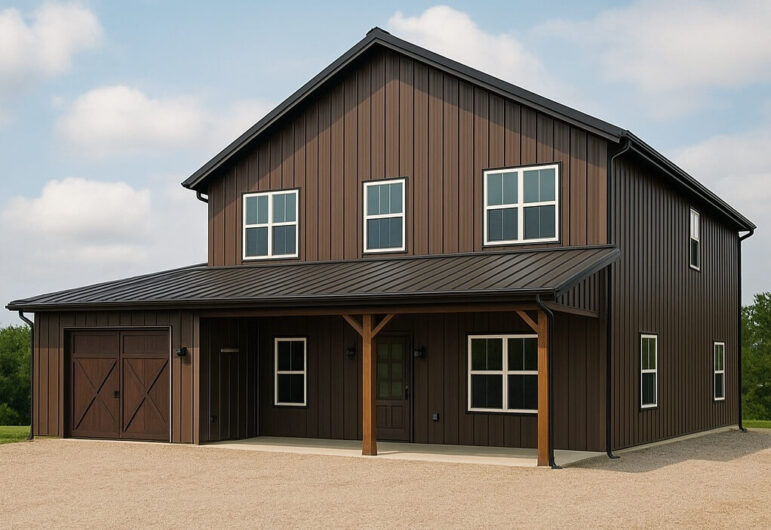
The barndominium trend has reshaped modern residential construction, offering a blend of rustic aesthetics and industrial durability. As homeowners increasingly prioritize sustainability and cost savings, a critical question arises: does the steel framing at the heart of these structures actually improve energy efficiency? The answer is not a simple yes or no. Steel offers distinct advantages that can enhance performance, but its true efficiency depends heavily on how the building envelope is assembled around it.
To understand the energy profile of a steel barndominium, one must look beyond the framing material itself and examine thermal dynamics, insulation strategies, and structural longevity.
The Thermal Conductivity Challenge
The most significant hurdle in steel construction is thermal bridging. Steel is an excellent conductor of heat and cold. In a wood-framed home, the wood itself provides a slight insulating value (R-value). Steel studs, however, have virtually no R-value. When steel studs bridge the gap between the interior conditioned space and the exterior environment, they create a pathway for heat to escape in winter and enter in summer. This can reduce the overall effectiveness of wall insulation by up to 50% if not addressed properly.
However, modern steel barndominiums are engineered to overcome this. Builders utilize continuous exterior insulation (rigid foam board) or insulated sheathing to wrap the steel frame. This creates a thermal break, preventing the steel from transferring temperature. When executed correctly, a steel-framed wall can achieve a higher total R-value than a standard wood-framed wall of the same thickness because the cavity can be packed with more insulation without the obstruction of wide wooden studs.
Airtightness and Moisture Control
Energy efficiency is not solely about insulation; it is also about air infiltration. Steel framing is inherently straight and dimensionally stable. Unlike wood, steel does not warp, shrink, or swell with humidity changes. This stability allows for a tighter building envelope. When steel panels and framing are sealed with spray foam or high-quality caulking, the result is a structure that resists drafts far better than traditional stick-built homes.
This tightness contributes to lower HVAC loads. By eliminating the random air leaks common in aging wood structures, a steel barndominium can maintain interior temperatures with less mechanical effort. Furthermore, steel is impervious to mold and rot. In humid climates, this resistance is a major energy saver; wood framing that absorbs moisture loses its insulating value and can degrade structural integrity, whereas steel remains unaffected.
The Role of the Roof and Reflective Surfaces
Barndominiums typically feature expansive metal roofs. From an energy standpoint, this is a significant asset. Metal roofs are highly reflective. Standard asphalt shingles absorb solar heat, driving up attic temperatures and forcing air conditioners to work harder. A light-colored or “cool” metal roof reflects a substantial portion of the sun’s radiant energy, keeping the attic—and by extension, the living space—cooler.
The steel structure also allows for a “cool roof” design, often incorporating radiant barriers. Because the steel roof deck is a continuous, solid surface, it is easier to seal and insulate than complex roof geometries found in traditional housing. This simplicity reduces the chance of gaps or voids where energy loss occurs.
Durability as an Efficiency Metric
Energy efficiency must be considered over the lifespan of the building. Steel framing does not degrade. It will not settle, crack drywall, or create gaps around windows and doors over time. These shifts are common in wood-frame homes as lumber dries out, and they are notorious for creating energy leaks.
By maintaining a consistently sealed envelope over decades, steel barndominiums offer a sustained level of efficiency that many wood structures cannot match without continuous maintenance. The durability of the steel shell protects the insulation and mechanical systems inside, ensuring they perform as intended year after year.
The Verdict
Steel does not make a barndominium energy-efficient by default; the material alone is not a magic bullet. However, steel provides a superior “skeleton” for energy-efficient design. Its straightness allows for superior airtightness, its structural strength supports deep insulation cavities, and its compatibility with metal roofing enhances thermal reflection.
In the hands of a skilled builder, steel framing mitigates the material’s conductivity through thermal breaks and maximizes the performance of modern insulation. When combined with high-quality windows, proper sealing, and strategic orientation, a steel barndominium can be a model of energy efficiency, outperforming traditional construction in durability and long-term operational savings. The steel is not the insulator; it is the durable, precise, and airtight frame that makes high-performance insulation possible.