
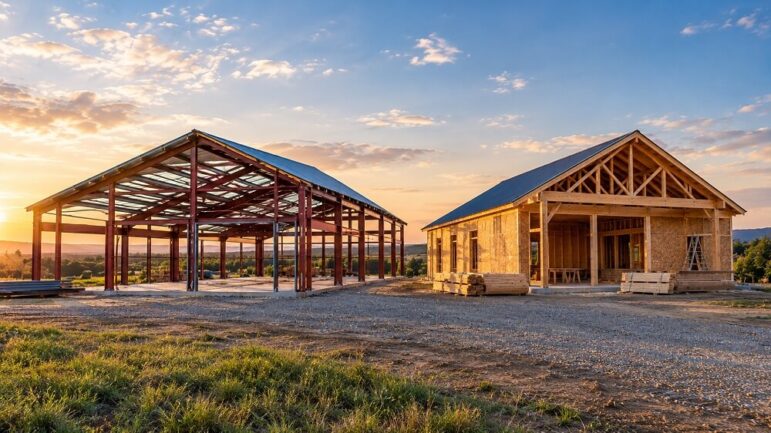
For decades, traditional wood framing was the default. But the rise of the steel-framed barndominium has created a compelling fork in the road for builders and homeowners alike. Understanding the distinct differences between these two construction methods is critical for anyone planning to break ground.
Here is a breakdown of how steel and wood compare in the construction of a barndominium.
The Structural Framework: Steel vs. Wood
The most significant divergence lies in the frame itself. This is the “bones” of the building.
Steel Framing (Red Iron)
When discussing steel barndominiums, the conversation usually revolves around “red iron” steel—heavy-gauge structural steel beams and columns. This is the same material used in commercial warehouses and industrial buildings.
- Strength and Spans: Steel offers an incredible strength-to-weight ratio. This allows for massive, unobstructed clear spans. If the goal is a massive workshop or an open-concept living area without support columns, steel is the superior choice.
- Precision: Steel beams are pre-cut and pre-drilled in a factory setting. This precision ensures the frame goes together like a giant puzzle, often leading to a structure that is perfectly square and plumb.
- Durability: Steel does not rot, warp, split, or crack. It is impervious to termites and other wood-destroying insects.
Wood Framing (Pole Barn or Stick-Built)
Wood construction for barndominiums typically falls into two categories: traditional stick-built (platform framing) or post-frame (pole barn). Post-frame construction is a popular hybrid, using large wooden posts embedded in the ground or on a foundation to support the roof.
- Workability: Wood is a familiar material. It is easy to cut, nail, and modify on-site. For intricate rooflines or complex interior layouts, wood offers a level of flexibility that steel cannot match.
- Thermal Properties: Wood naturally has a higher R-value (thermal resistance) than steel. Steel acts as a thermal bridge, conducting heat and cold, which requires specific insulation strategies to prevent energy loss.
- Availability: Wood is widely available, though prices can fluctuate wildly based on the lumber market.
The Exterior Shell: Siding and Roofing
The frame is only half the battle. The exterior envelope determines the look and weather resistance of the barndominium.
Steel Exteriors
Steel buildings usually feature metal siding and roofing. This creates a monolithic, highly durable shell.
- Maintenance: A steel exterior is virtually maintenance-free. It won’t need painting every few years, nor will it rot or attract mold.
- Fire Resistance: Steel siding and roofing offer superior fire resistance compared to wood or vinyl.
- Aesthetics: Modern steel siding comes in a variety of colors and profiles, mimicking wood grain or standing seam metal. However, it can dent under heavy impact.
Wood Exteriors
A wood-framed barndominium can be clad in anything: metal, vinyl, brick, or wood siding.
- Versatility: This allows for a more customized, “homey” look. A barndominium with board-and-batten siding or stone wainscoting looks distinctly different from a steel warehouse.
- Maintenance: Wood siding requires painting, sealing, and staining. It is susceptible to rot, moisture damage, and pest infestation if not properly maintained.
Insulation and Energy Efficiency
How the structure handles the elements is a major factor in long-term ownership costs.
Steel Framing
Steel is a conductor. In a steel-framed building, the exterior temperature transfers directly to the interior frame.
- Solution: Steel barndominiums require continuous insulation (often rigid foam board) on the exterior or spray foam insulation on the interior to break the thermal bridge. While this adds upfront cost, it creates an incredibly airtight building.
- Efficiency: Once insulated correctly, a steel building is highly energy-efficient due to its tight envelope.
Wood Framing
Wood is a natural insulator.
- Solution: Wood studs still create thermal bridging, but less severe than steel. Standard fiberglass batts or blown-in insulation can be used effectively.
- Efficiency: Wood structures breathe differently than steel. They can be very efficient, but air sealing is critical to prevent drafts.
Cost and Timeline
Steel Construction
- Cost: The material cost for steel is often higher than wood, but labor costs can be lower because the frame erects quickly. However, finishing the interior (framing out rooms, hanging drywall) requires additional wood framing or metal studs inside the shell, adding a layer of expense.
- Timeline: The shell of a steel building goes up fast. However, the interior build-out can be slower because traditional trades (plumbers, electricians) must adapt to the steel environment.
Wood Construction
- Cost: Material costs fluctuate. When lumber prices are low, wood is cheaper. When they spike, steel becomes competitive. Labor is generally standard, as most contractors are familiar with wood framing.
- Timeline: Stick-built construction can be slower than steel erection, but the interior finishing phase often moves faster because the framework for utilities is already in place.
The Verdict: Which is Right?
The choice between steel and wood is not about one being objectively better; it is about which aligns with the specific goals of the project.
Choose Steel If:
- The priority is a massive, open floor plan without support beams.
- Long-term durability and pest resistance are paramount.
- A modern, industrial aesthetic is desired.
- The building is in a region prone to high winds or heavy snow (steel is often engineered to withstand extreme weather).
Choose Wood If:
- The design requires complex architectural details or a traditional residential feel.
- The builder is more comfortable with traditional framing methods.
- The goal is to save money on interior finishing labor.
- A hybrid approach (post-frame) is preferred to reduce foundation costs.
Ultimately, the barndominium is a versatile structure. Steel offers a robust, commercial-grade shell that lasts for generations, while wood offers the warmth and flexibility of traditional homebuilding. The right choice depends on balancing the budget against the desired lifespan and aesthetic of the home.