
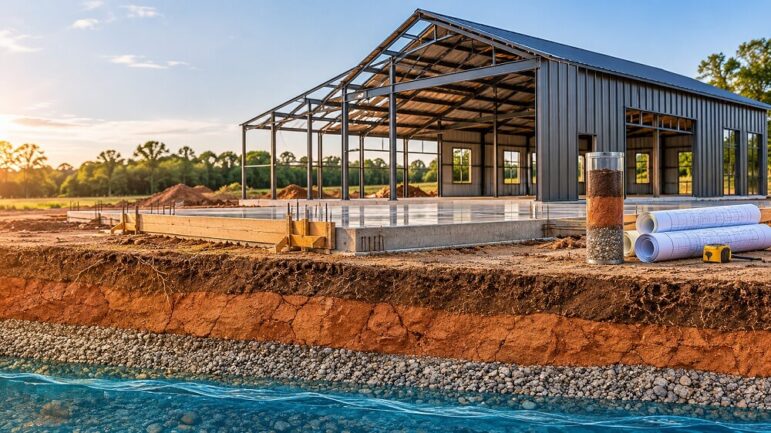
Barndominiums have surged in popularity for good reason. They offer a unique blend of rustic charm, open-concept living, and unparalleled durability. With their monolithic slabs and steel framing, these structures often appear indestructible. However, the most critical component of a barndominium isn’t the gauge of the steel or the finish of the siding—it is what lies beneath the surface.
Soil conditions are the silent partner in every construction project. For a barndominium, which often carries significant weight and utilizes specific foundation designs, understanding the ground beneath the build is non-negotiable. Ignoring soil mechanics can lead to catastrophic structural failure, from cracked slabs to shifting frames.
Here is a breakdown of how soil conditions dictate the construction process of a barndominium.
The Significance of Soil Bearing Capacity
Every structure transfers its weight down into the earth. This is known as the load. The soil must have the strength to support this load without excessive settling or shifting. This limit is called the bearing capacity.
Barndominiums present a unique load profile. While they are often lighter than traditional brick-and-mortar homes in terms of wall weight, they frequently feature large, heavy concrete slabs and steel framing that create concentrated loads at specific points. If the soil has a low bearing capacity—meaning it is too loose or soft—the structure will sink unevenly. This differential settlement is the enemy of rigid finishes, causing drywall cracks, sticking doors, and, in severe cases, structural compromise.
Common Soil Types and Their Behavior
Not all dirt is created equal. The composition of the soil determines the engineering requirements for the foundation.
- Sand and Gravel: These are generally excellent for construction. They are granular, drain water quickly, and offer high bearing capacity. However, they must be properly compacted. If left loose, sandy soil can shift, especially during heavy rains, potentially undermining the foundation.
- Clay: This is the most problematic soil type for barndominium construction. Clay expands significantly when it absorbs water and shrinks when it dries. This cycle of swelling and shrinking creates movement under the foundation. A slab poured on expansive clay without proper reinforcement or soil treatment will likely crack as the earth moves beneath it.
- Silt: Often found near water sources, silt is composed of fine particles that are easily washed away. It holds water and is prone to frost heave in cold climates, which can lift a foundation unevenly during winter freezes.
- Loam: While excellent for gardening, loam is a mix of sand, silt, and clay. It is generally stable but can be susceptible to erosion if not properly drained.
The Water Table and Drainage
Water is the primary catalyst for soil failure. The water table—the level at which the ground is permanently saturated—plays a vital role in foundation design.
If the water table is high, the soil is perpetually moist and weak. Building a heavy barndominium on saturated soil is akin to building on a sponge. Even if the water table is low, poor surface drainage can create localized saturation. If water pools around the foundation, it can seep into the soil, softening it and reducing its ability to bear the weight of the structure.
Proper site grading and drainage systems are essential. The goal is to keep the soil under the foundation at a consistent moisture level. Fluctuating moisture is often more damaging than consistently wet conditions because it causes the soil to move.
Expansive Soils and Foundation Solutions
In regions where expansive clay is prevalent, standard foundation techniques may not suffice. For a barndominium, which often utilizes a slab-on-grade foundation, encountering expansive soil requires specific interventions:
- Over-Excavation: The builder removes the problematic soil to a certain depth and replaces it with stable, compacted fill material.
- Pier and Beam: Instead of a slab, the structure is supported by deep piers that reach down to stable bedrock or soil layers below the active zone.
- Post-Tension Slabs: This involves installing high-strength steel cables within the concrete slab. After the concrete cures, the cables are tensioned, compressing the slab so it can resist the upward pressure of swelling soil.
The Necessity of Geotechnical Testing
The only way to know what lies beneath a potential building site is to dig. A geotechnical soil test is a mandatory step for any serious barndominium project. This involves drilling boreholes and extracting soil samples for laboratory analysis.
This report provides the specific data needed to design the foundation. It tells the engineer exactly what the bearing capacity is, the plasticity index of the clay, and the depth of the water table. Skipping this step to save a few hundred dollars can result in tens of thousands of dollars in foundation repairs later.
Fill Dirt vs. Native Soil
A common pitfall in rural construction is the use of “fill dirt.” Unlike undisturbed native soil, which has been compacted by nature over millennia, fill dirt is loose and often contains organic matter that will decompose over time, creating voids.
If a barndominium is to be built on a graded pad, the fill dirt must be free of organics and compacted in thin lifts (layers) using heavy machinery. A geotechnical engineer will often require a “proctor test” to ensure the fill has reached the required density before the foundation is poured.
Conclusion
Soil conditions dictate the cost, timeline, and longevity of a barndominium project. While the aesthetics of the home are important, the invisible engineering below the ground is what keeps the structure standing. From the threat of expansive clay to the risks of a high water table, a thorough understanding of the site’s geology is the foundation upon which a safe and durable barndominium is built.